

How to Choose a Horse Trainer (7 Questions You Should Ask Before Sending Your Horse Anywhere)
- Chad Menard
- Jan 8
- 3 min read
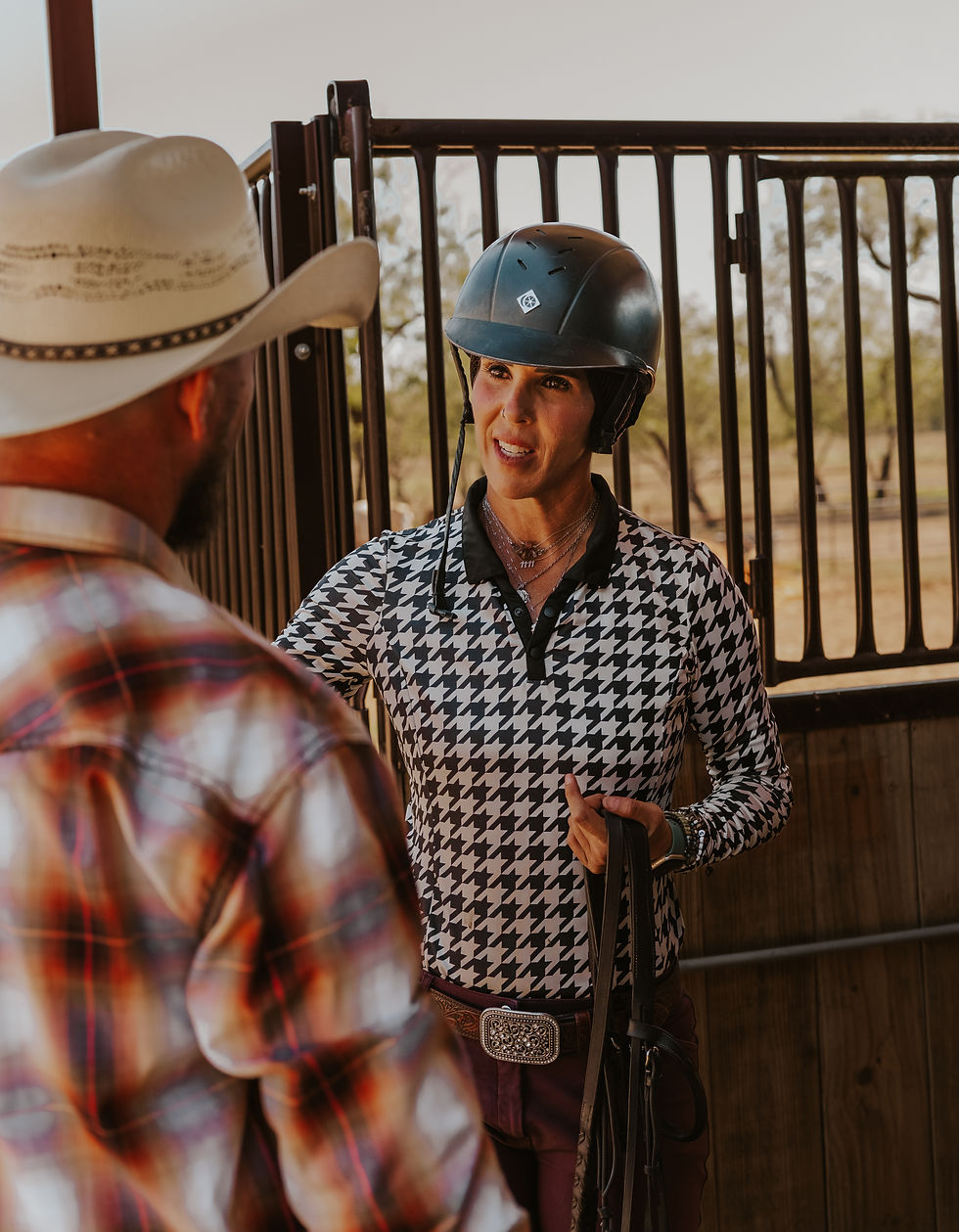
Sending your horse to training is a big decision. You’re not just paying for rides or sessions—you’re trusting someone with an animal you care deeply about, often one you’ve invested years of time, money, and emotion into.
Yet many owners choose a trainer based on proximity, price, or availability—only to feel disconnected, frustrated, or unsure once training begins.
Before you send your horse anywhere, here are seven questions every owner should ask to make sure the trainer you choose is the right partner for you and your horse.
How will I be involved in my horses training?
How will I be involved in my horses training?
Training shouldn’t feel like dropping your horse off and waiting for a surprise at the end.
Ask:
Will I receive regular updates?
Can I visit or observe sessions?
Is there communication beyond invoices?
The best training programs involve the owner throughout the process so progress doesn’t disappear once the horse goes home.
How are goals set—and how often are they reviewed?
Every horse is different. Training should never be “one size fits all.”
A solid program will:
Establish long-term goals for the horse
Set weekly focus areas
Adjust expectations based on how the horse responds
Clear goals create clarity, confidence, and measurable progress.
What happens if my horse struggles or hits a plateau?
Learning is not linear. Horses have good days, slow days, and days where things just don’t click.
A quality trainer doesn’t force progress—they:
Break challenges into smaller steps
Change the approach when needed
Prioritize understanding over speed
Ask how challenges are handled before they happen
What methods are used when behavior problems show up?
This is one of the most important questions you can ask.
Listen for answers that emphasize:
Clear communication
Timing and feel
Consistency over pressure
Building confidence instead of fear
How a trainer handles problems tells you everything about their philosophy.
How is my horse cared for day-to-day?
Training success depends heavily on daily care and consistency.
Ask about:
Feeding and turnout routines
Handling outside of training sessions
Physical and mental wellbeing
A calm, well-cared-for horse learns faster and retains more.
What does “success” look like at the end of training?
A horse that performs well for the trainer but not for the owner isn’t a success.
Great programs prepare:
The horse to understand the work
The owner to confidently step in
Transition planning matters just as much as the training itself.
What support exists after training ends?
Training shouldn’t end the day your horse goes home.
Ask if there is:
Follow-up communication
Support during the transition
Opportunities for lessons or check-ins
The best trainers stay invested in long-term success.
What we believe at Double 11 Horsemanship.
At Double 11 Horsemanship, we believe:
Training is a partnership, not a transaction
Quality matters more than quantity
Owners should be involved, informed, and confident
Horses learn best through clarity, timing, and consistency
Long-term success is more important than quick results
Our programs are built to support the horse and the owner—during training and well after it ends.
Thinking About Training? Let’s Talk
If you’re considering training and want to talk through your goals, we’re always happy to have a conversation. No pressure, no obligation—just an honest discussion to see if we’re the right fit for you and your horse.

Comments